Serving Bridgeport
Sump Pump Installation in Bridgeport
Call us for a free sump pump installation estimate
Serving Bridgeport
Call us for a free sump pump installation estimate
A sump pump is the working end of many Norristown waterproofing systems. Water collects in a basin below the basement floor, the float activates the pump, and the discharge line sends the water away from the foundation.
Near the Schuylkill River and other low areas, groundwater can rise fast during long rain. A shallow pit, weak pump, missing check valve, or short discharge hose can turn a normal storm into water across the slab. Homes with finished basements need an even better setup because flooring and drywall can hide early warning signs.
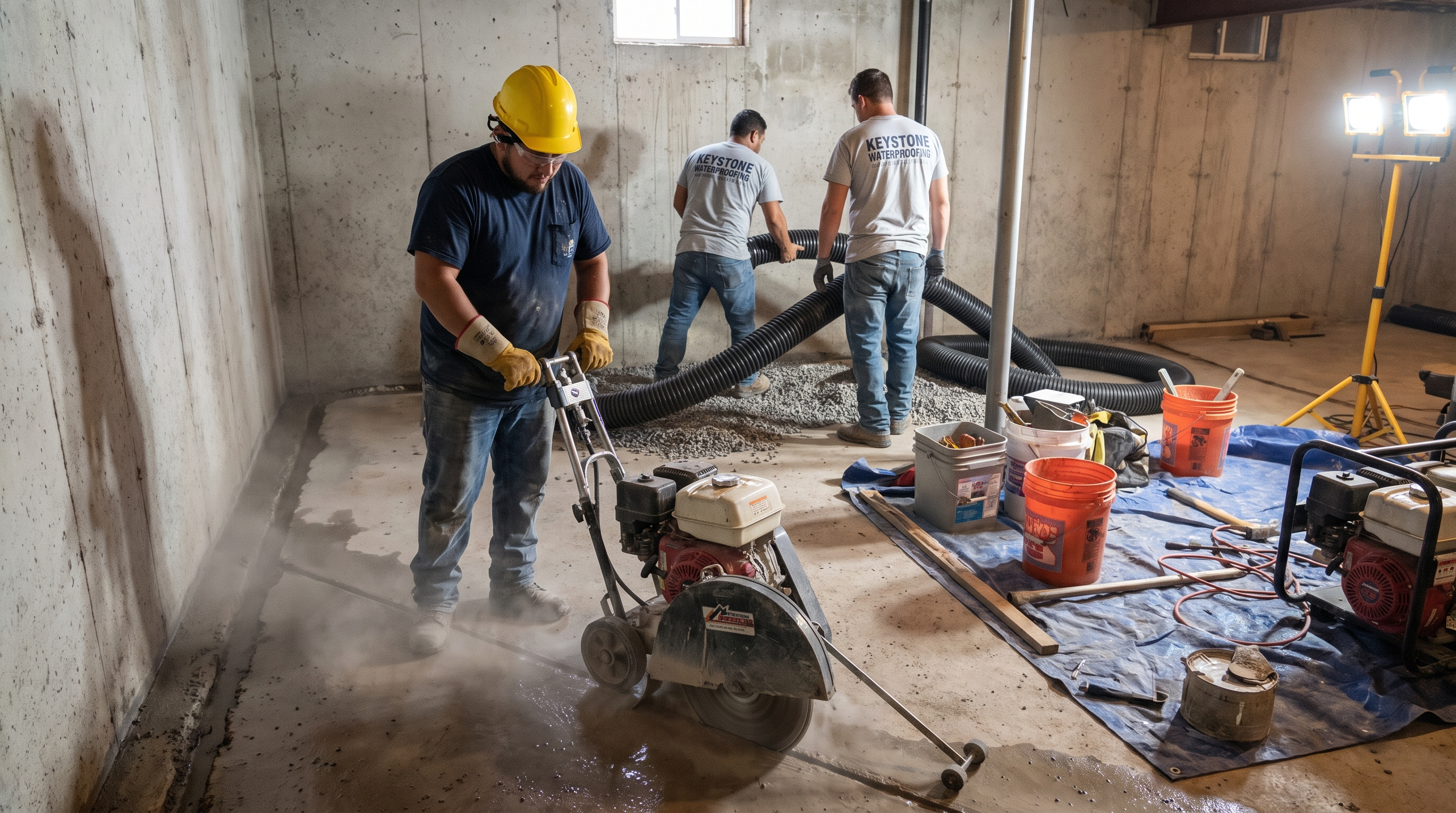
Good sump pump installation includes basin sizing, pump selection, lid fitting, check valve placement, discharge routing, electrical planning, and backup options. Battery backup matters in Norristown because major storms can bring power outages at the same time the pump needs to run hardest.
A sump pump does not replace flood insurance in mapped flood zones. It does reduce seepage risk from groundwater and interior drain systems when the pump and discharge route are designed correctly.
Bridgeport sits close to the Schuylkill River, so wet basements can involve groundwater, low lying lots, older storm drainage, and masonry foundations that seep after long rain. Row homes and twins with shared walls can make exterior repairs difficult, especially where alleys, sidewalks, and neighboring structures limit access.
A Bridgeport waterproofing inspection should separate normal seepage from true flood exposure. An interior drain and sump pump can manage groundwater pressure, but river flooding may still require FEMA flood zone awareness and separate flood insurance planning.
Many Bridgeport basements hold mechanical systems, laundry, storage, and utility connections. If water enters through wall joints or the slab edge, a perimeter drain, sump pump, wall drainage panel, or targeted crack repair may be needed before the next storm cycle.
A small pump in an active Norristown basement can short cycle or fail during a hard storm. The contractor should consider drain connections, groundwater, basin depth, and discharge distance.
Water pumped outside can return to the basement if it exits too close to the wall. The estimate should show where the discharge goes and how it moves away from the home.
Get the sump checked before storm season tests it for you.
Free — no obligations